
Establish the problem before choosing the formulation
Describe the activity you have actually seen: insects in a planting bed, repeated movement near a doorway or damage to a lawn. A brown patch alone does not establish an insect problem. Recent watering changes, plant care and other conditions may need assessment by the appropriate professional. Do not choose an insecticide merely because the affected area is outdoors.
Ask which pest the proposed service targets and how that identification was reached. If the concern is ants or crickets moving toward the house, the relevant service page can help organize the discussion. If the concern is plant health, clarify whether that task falls within the provider's service. A useful recommendation connects the pest and application site to the work proposed instead of treating the entire yard as one undifferentiated surface.
Know what granular means
Seeing this at your place? We'll call you.
Got it. Keegan or Ryland will call you from 480-454-7750.
Prefer to book yourself? Pick a time →Thanks. Your details are with the owners.
★ 5.0 on Google (46 reviews) · Veteran-owned · AZ license #10744 · No annual contract
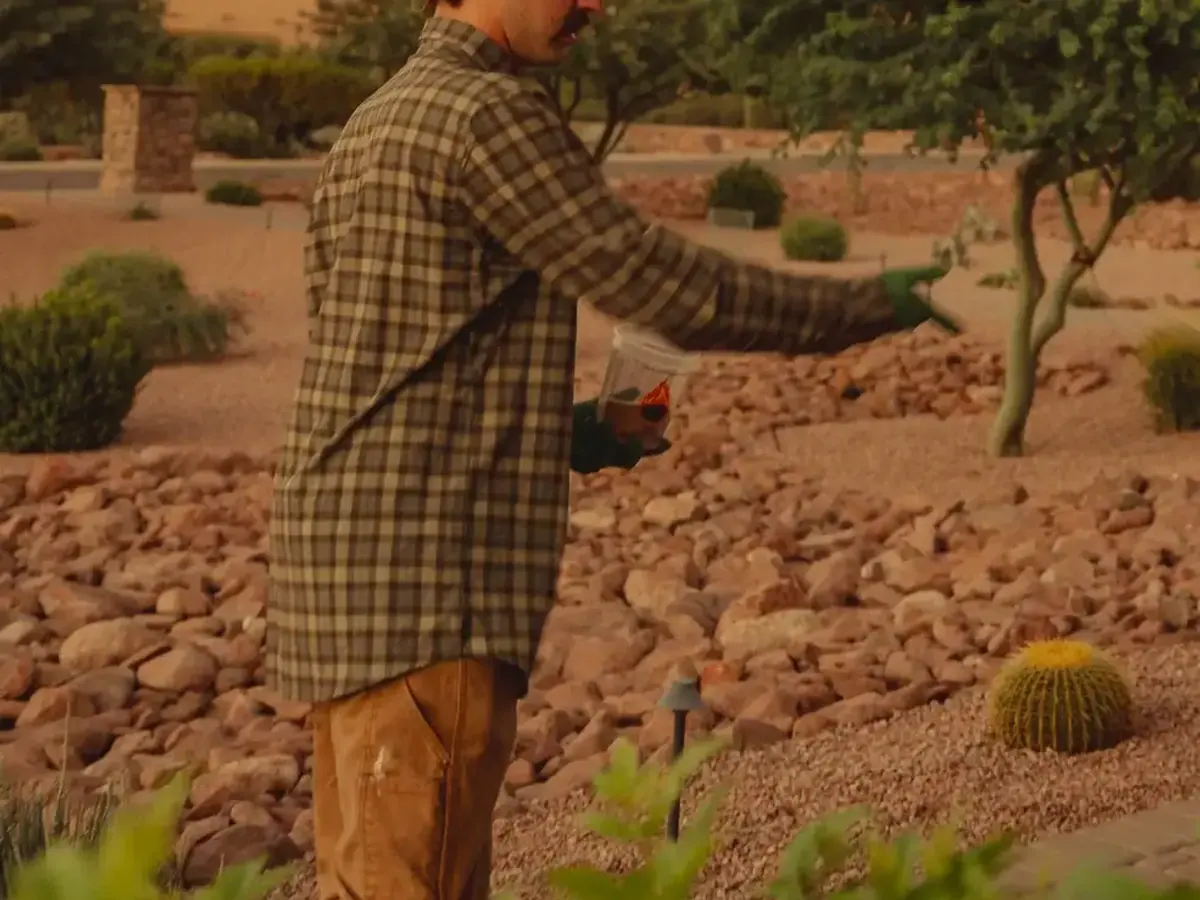
NC State Extension describes pesticide formulations as ways active ingredients are prepared for use. Granules carry pesticide material in small dry particles. That physical form is distinct from a spray, but it does not determine the full set of uses, restrictions or precautions. The exact product label remains the reference for the target pest and application site.
A granular insecticide is also different from lawn fertilizer, even if the equipment or particles look familiar. Do not assume that a product used by a lawn-care provider is interchangeable with one used for household pests. Ask for the product information and a plain-language description of its role in the plan. The answer should explain why that formulation fits the identified concern, not simply describe it as stronger or longer-lasting without a basis.
Map the lawn and beds as different areas
Show the provider the boundaries between turf, gravel, soil, mulch, paving and building edges. Point out edible plants, flowering areas, pet spaces and any location where people sit or play. A product allowed in one setting is not automatically suitable in another. The proposal should identify the actual treatment areas rather than using the word yard to imply blanket coverage.
Include drains, irrigation equipment and slopes in the walkthrough. Explain which areas you control and whether a landscaper or HOA manages others. Do not authorize treatment beyond your property or into a common area by assumption. A simple marked photograph can help everyone understand the agreed boundary. Keep the image with the proposal so later maintenance does not rely on a vague memory of where the product was intended to go.
Get product-specific watering instructions
Some granular products require watering as part of their use, while others have different directions. Ask for the exact instructions before changing the irrigation controller. EPA advises following the label's watering requirements and avoiding runoff. More water is not automatically better, and a general statement that every granule must be soaked is not a substitute for the applicable directions.
Decide who will carry out any required watering and when the instructions will be communicated. If a landscaper controls the system, involve that person before treatment. Tell the provider about a broken valve, unreliable timer or area that drains toward pavement. If rainfall or irrigation changes the conditions, ask how the plan should be handled. Do not create your own replacement schedule from a different product or a previous appointment.
Plan access for pets and children
Remove movable toys, bowls, bedding and other belongings from the work area as instructed. Tell the provider about animals that dig, chew plants or spend time in a specific lawn section. NPIC notes that granular lawn products can have access restrictions while granules dissolve and the area dries; the exact label and service instructions determine what applies.
Do not assume that dry particles mean the lawn is immediately available. Ask how you will know when the area can be used again and share those instructions with everyone responsible for children or animals. If a household routine cannot accommodate the restriction, discuss another arrangement before service. A broad phrase such as pet-friendly does not replace the practical directions needed for a dog walker, caregiver or family member arriving later.
Keep product out of unintended areas
EPA's runoff guidance emphasizes the location of storm drains, drainage ditches and surface water. Point out those features before treatment, along with hard surfaces where misplaced material could later wash away. The applicator should follow the product directions and address any material outside the intended area. Do not hose stray granules into a drain as a cleanup shortcut.
If you notice something after the visit that concerns you, keep people and pets away from that spot and contact the provider for instructions. Avoid improvising cleanup or moving material into another garden bed. Keep the product name available in case technical or medical guidance is needed. For suspected exposure involving a person or animal, seek Poison Control or veterinary assistance as appropriate; a routine service follow-up is a separate matter.
Define the service and evaluate the result
Ask whether the proposed granular treatment is included in your current agreement or quoted separately. Identify the target areas, preparation, watering responsibility and follow-up. General pest protection should not be assumed to include every lawn and planting bed. If a recommendation changes after inspection, get the revised scope before additional work begins.
Track the specific concern afterward rather than judging only by whether you can still see granules. Record the pest, location and timing of further activity and share it with the provider. Our general pest page explains routine protection, while the ant and cricket pages address common yard-related inquiries. The kids and pets guide covers broader household coordination. Call NEARPEST at 480-454-7750 to discuss what is happening in your yard and whether a granular treatment belongs in the plan.

Questions about granular pest treatment for bushes and lawns
Is granular pest treatment the same as fertilizing my lawn?
No. A pesticide formulation targets a labeled pest and application site. Fertilizer has a different purpose.
Should I run the sprinklers immediately after granules are applied?
Follow the exact product-specific directions. Do not change the irrigation schedule based on a rule for all granular products.
Does general pest service include every lawn and planting bed?
Do not assume that. Ask which areas are included and whether the proposed granular work has a separate price.
What if granules appear on a walkway after the visit?
Keep people and pets away from the spot and contact the provider for instructions. Do not wash the material into a drain.