No contracts
Month-to-month, so we have to earn every visit.
Scorpion prevention
Scorpions need prey and shelter; moisture can also draw them near homes. Reduce those conditions and seal entry gaps. A sighting alone does not reveal the cause.
Month-to-month, so we have to earn every visit.
Starting prices published before you commit.
If covered pests return, so do we.
Based in San Tan Valley and answered by the owners.
Food, moisture, and hiding places can support scorpions around a home. Door, window, and utility gaps provide access. Fix leaks, reduce clutter, manage insect activity, and repair entry gaps. Outdoor lights can attract the insects scorpions eat.
| Condition | First check |
|---|---|
| Food supply | Crickets and roaches near doors, lights, and stored food |
| Moisture | Plumbing leaks and wet soil along the foundation |
| Access | Door sweeps, window screens, and utility gaps |
| Shelter | Wood, cardboard, debris, and stored materials |
What to do: Check where crickets and roaches gather. Store pet food in sealed containers, clean up spills, and discuss both scorpions and their prey during an inspection. A scorpion sighting alone does not prove you have an indoor insect infestation.
What to do: Look under sinks, around hose connections, and along irrigation lines. Repair leaks and correct drainage where water collects near the foundation. Have an HVAC professional check abnormal pooling around the A/C; do not block its condensate drain.
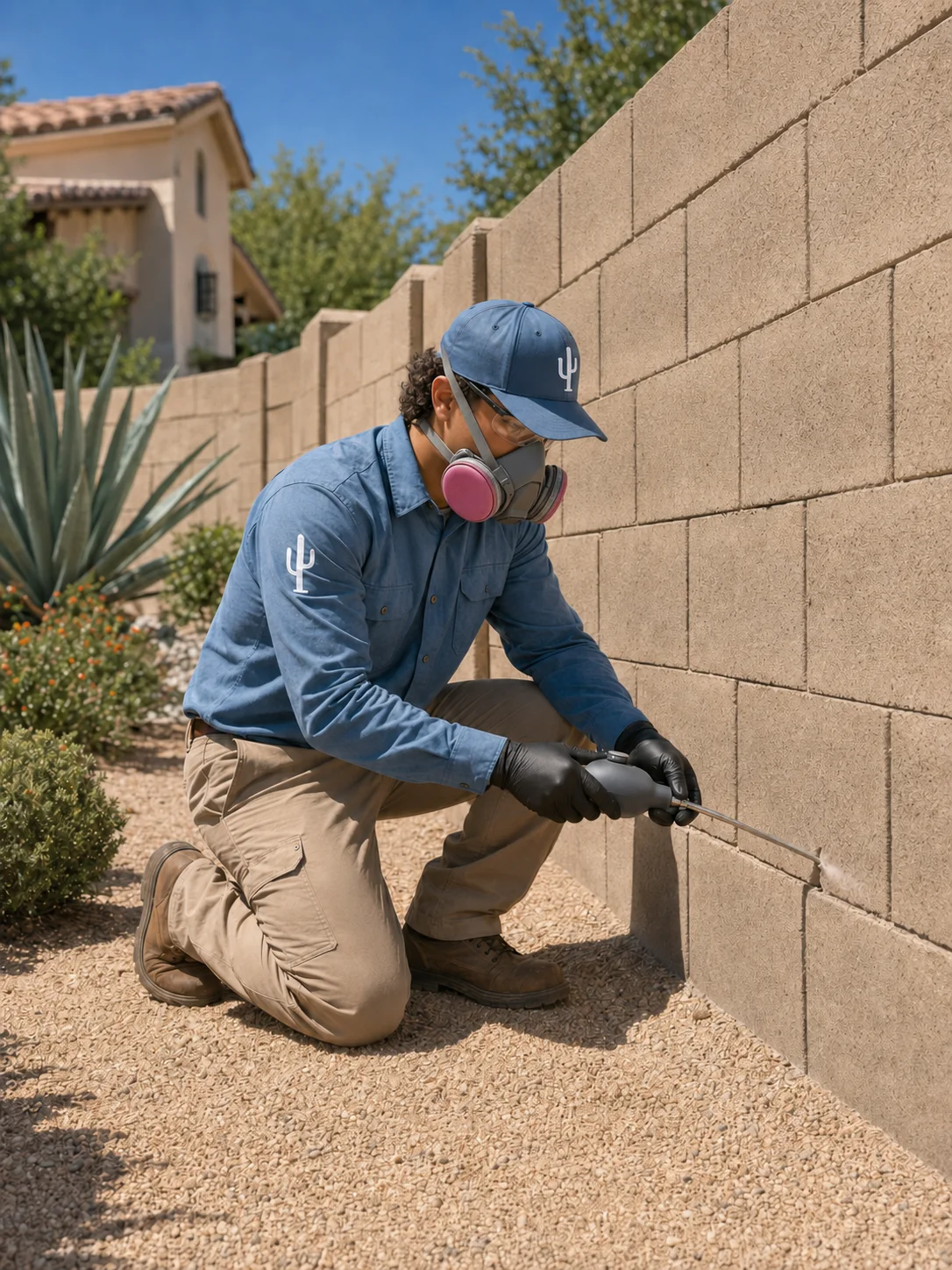
What to do: Check door sweeps, weatherstripping, screens, and pipe penetrations. Inspect block-wall crevices and stored materials near the house for shelter. Use appropriate exclusion repairs without closing required drainage or ventilation openings.
What to do: Move stored material away from exterior walls where practical. Replace loose cardboard storage with lidded bins and keep the floor accessible for inspection. Wear gloves and closed shoes when clearing debris, and avoid reaching into concealed spaces.
What to do: Use yellow outdoor lighting where suitable and turn off unnecessary lights. Keep essential walkways safely lit. Changing a bulb can reduce insect attraction, but it will not seal entry gaps or remove existing hiding places.
What to do: In growing areas such as San Tan Valley and Queen Creek, recheck doors, stored building materials, and the yard after work nearby. Look for the same food, moisture, shelter, and access conditions you would at an established home.
For repeated indoor sightings, note the room, date, and nearby openings before arranging an inspection. Keep people and pets away from the scorpion and avoid handling it.
Standard scorpion protection is included in General Pest Protection. Scorpion sealing and exclusion are separate services from $399. Compare included protection and optional services, learn about scorpion control, or use our Arizona scorpion identification table.
NEARPEST serves San Tan Valley, Queen Creek, Gilbert, Chandler, Mesa, and Scottsdale. Check service areas and request pricing for your address.
Prey, moisture, shelter, entry points, and lighting guidance: University of California IPM: Scorpions.
Home exclusion and repair guidance: University of Arizona Cooperative Extension: Pest-proofing Your Home.
Prey, moisture, and protected hiding places can make an Arizona property suitable for scorpions. Check irrigated areas, outdoor lighting, stored materials, and the openings that connect the yard to the house.
Inspect loose door sweeps, window screens, utility penetrations, and cracks around the structure. Bark scorpions can climb rough surfaces, so entry points are not limited to ground level. Inspect stored items before bringing them indoors.
Yes. A clean home can still have an entry gap or sit near outdoor shelter and insect activity. A sighting is a reason to inspect, rather than proof that the home is dirty.
A treatment cannot repair a door gap or remove a leak. Lasting prevention requires attention to entry points, shelter, and pest activity, with treatment selected for the property. Recurring visits allow the technician to monitor changes and adjust the approach.

See your price online or call and talk to Ryland or Keegan.