Skip to content
NEARPEST.

Arizona Bark Scorpions

Scorpion Control That
Actually Works

Blacklight inspections, block wall treatment and home sealing across Phoenix's East Valley. Shield+ scorpion plans run $45/mo with a $99 initial visit.

Licensed · AZ Office of Pest Management

Free re-service between visits

Prices published — no mystery quotes

Same-day service when booked by 1pm

The Arizona bark scorpion is the most venomous scorpion in the United States, and the East Valley is its home turf. It climbs walls. It crosses ceilings. It fits through a gap of 1/16 of an inch — about the thickness of a credit card. If you've found one in the bathtub at 2am, you already know: this is not a pest you spray once and forget.

Here's the part most companies won't say out loud: scorpions are genuinely hard to kill with spray alone. They resist the surface treatments that knock down ants and roaches, and they spend the day hidden deep in block walls and under rock where product never reaches. Controlling them takes a system, not a spritz.

That's the system NEARPEST built: blacklight night inspections, crack-and-crevice treatment, block wall work, cutting off the food supply and sealing the house. We're licensed by the Arizona Office of Pest Management and headquartered in Gilbert — in the middle of some of the heaviest scorpion pressure in the Valley.

What we do

Blacklight Night Inspections

Bark scorpions glow blue-green under UV light. We hunt them at night, when they're active, and treat where we actually find them.

Block Wall Treatment

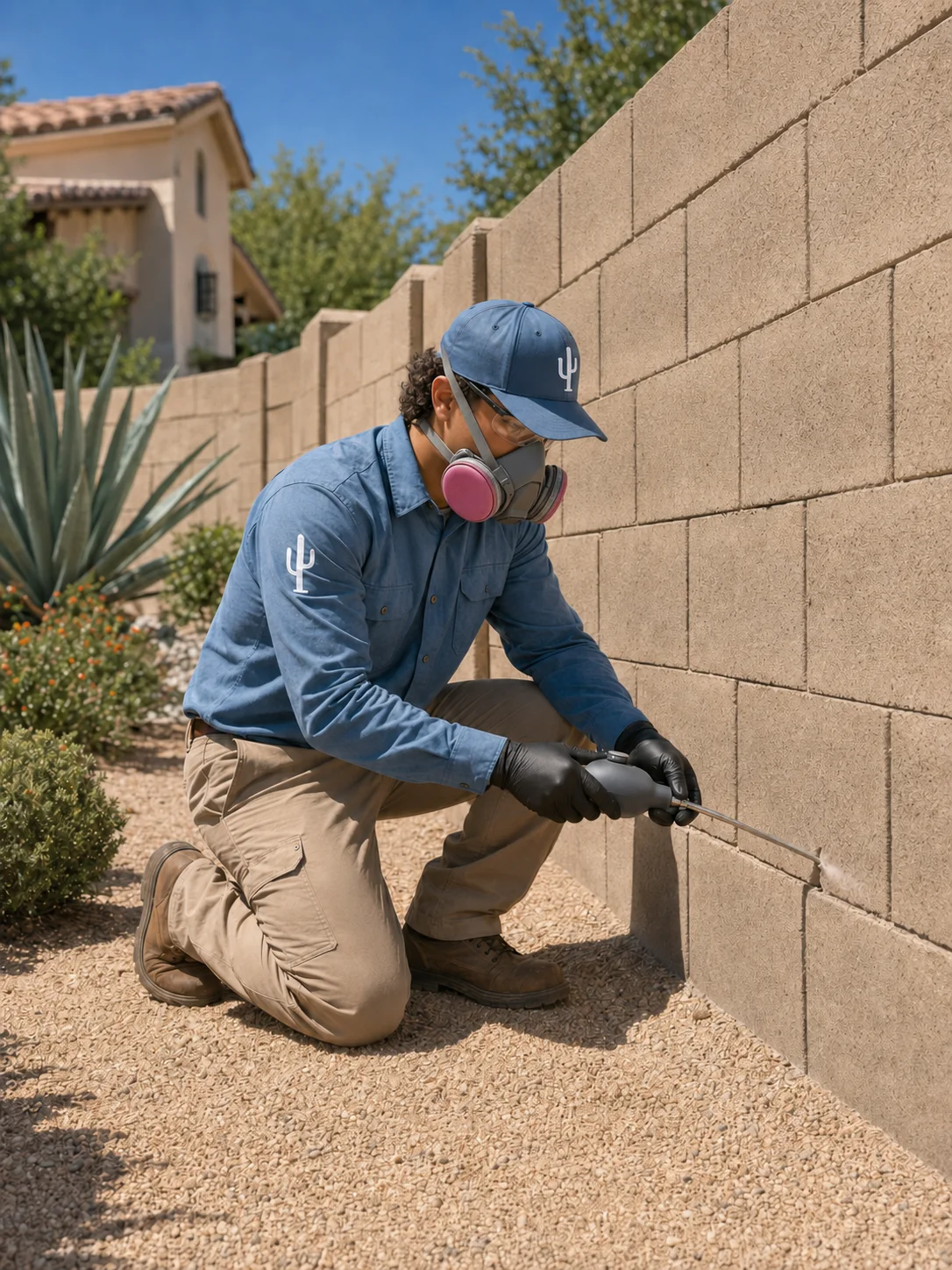
Your block fence is a scorpion apartment complex. We treat the wall voids and the base line they travel.

Food Supply Cutoff

Bark scorpions eat crickets. Aggressive cricket control starves them out — fewer crickets, fewer scorpions.

Exclusion and Sealing

We find and close the 1/16-inch gaps they use to get inside — door sweeps, weep screeds, expansion joints, utility penetrations.

Why East Valley Homes Get Scorpions

If your neighborhood backs up to a desert wash, you're living on a scorpion highway. Washes are natural harborage and travel corridors, and the homes along them get hit first and hardest — Queen Creek, San Tan Valley and east Mesa know this well.

New construction makes it worse. Every time a subdivision scrapes raw desert, the scorpions that lived there don't die — they relocate into the established yards, block walls and garages next door. If sightings spiked when the lot behind you got graded, that's not a coincidence.

Then your own yard finishes the job. Block walls offer thousands of protected voids that hold warmth at night. Drip irrigation creates moisture in a desert, which draws crickets and roaches — the bark scorpion's food. Shelter plus water plus food equals a population that sustains itself until something breaks the cycle.

How We Actually Get Rid of Scorpions

Step one is finding them. Bark scorpions fluoresce under ultraviolet light, so we run blacklight inspections after dark — checking block walls, the foundation line, weep holes and landscape rock. A night hunt tells us exactly where the population lives instead of guessing from a daytime walk-around.

Step two is treating harborage, not just surfaces. Scorpions shrug off light surface sprays, so we do targeted crack-and-crevice work: wall voids, expansion joints, the base of block fencing and the gaps behind stucco weep screed. We put product where scorpions actually spend the day.

Step three is starving them. Bark scorpions follow their food, and in Arizona that food is mostly crickets. Every scorpion service includes aggressive cricket control — granules in the landscape, a full perimeter barrier and harborage cleanup. Kill the buffet and the predators leave or die. Step four is sealing the house itself, so whatever survives outside stays outside.

Scorpion-Proofing and Prevention

Sealing is the part that lasts. Door sweeps that actually touch the threshold, screen on weep holes, caulk on foundation cracks and utility penetrations, weatherstripping on the garage door. A bark scorpion needs only 1/16 of an inch, so the standard is tight — and worth it.

Your habits matter too. Keep firewood and stacked block off the house. Shake out shoes and pool towels that live outside. Fix leaky drip emitters — moisture is the magnet. And rethink bright exterior lights, which pull in the insects scorpions hunt.

Our Shield+ plan was built for this exact pest: bi-monthly visits at $45/mo, scorpion-specific products, block wall treatment and blacklight inspections on request, after a $99 initial visit. It's our most popular plan because in the East Valley, scorpions are the pest people actually call about.

Plans & pricing

Covered on a plan, priced in public.

Shield

Every 90 days

$35/mo

$105 billed quarterly

Year-round coverage for the common desert pests.

Start with Shield
Most Popular

Shield+

Every 60 days

$45/mo

$90 billed every 2 months

Our scorpion plan. Bi-monthly visits tuned to AZ scorpion pressure.

Start with Shield+

Max

Monthly

$59/mo

$59 billed monthly

Maximum pressure control — monthly visits plus seasonal mosquito.

Start with Max

$99 initial visit — One-time initial visit — full interior + exterior knockdown service. Often discounted with an annual plan.

Compare all plans →

Questions, answered

What should I do if a scorpion stings me?

Wash the site, apply a cool compress and keep the area still. Most healthy adults get sharp localized pain, numbness or tingling that fades within a day or two. For young children, the elderly, or anyone with trouble breathing, muscle twitching or erratic eye movements, call the Poison Control line at 1-800-222-1222 or seek medical care right away — bark scorpion venom hits small bodies much harder.

Are scorpions dangerous to dogs and cats?

Most pets take a sting on the paw or nose, yelp, and recover fine. Watch for excessive drooling, swelling or labored breathing — those warrant a vet call. If your pet keeps finding scorpions indoors, treat that as your early-warning system: the population around your home needs professional attention.

Do foggers or bug bombs work on scorpions?

No. Foggers put product into the open air, and scorpions spend their lives in cracks, wall voids and under objects where fog never reaches. They also resist surface sprays better than most insects. A fogger will kill some crickets and accomplish little else — save your money.

How long until I see results?

Most homes see a real drop in sightings within the first one to two services as we treat harborage and knock down the cricket food supply. Heavy pressure near washes or active construction takes longer — expect steady improvement over a season, not an overnight miracle. Sealing the home accelerates everything.

Which plan do I need for scorpions?

Shield+ at $45/mo. It runs every 60 days — quarterly gaps are too long for scorpion pressure — and includes scorpion-specific products, block wall treatment and blacklight inspections on request. The initial visit is $99, and re-services between visits are free.

Can you eliminate scorpions completely?

Honest answer: no one can promise zero scorpions in Arizona, and you should be suspicious of anyone who does. What we can do is drive the population down hard, cut off its food and seal your home so survivors stay outside. Most customers go from regular sightings to rare ones — and that's a promise we can keep.

Related

Ready when you are.

Call now or book online. If pests show up between visits, so do we — free.

Call NowGet a Quote