SCORPION CONTROL — MESA
Scorpion Control in Mesa's Foothills and Washes.
Northeast Mesa's washes carry bark scorpions from the Usery foothills straight into neighborhood block walls. We treat the corridors, not just the yard.
Starting at $49/mo · no contracts · free re-service
No contracts
Published pricing
Free re-service
Taking calls 24/7
Mesa's scorpion map follows its drainages. The natural washes running through Las Sendas, Red Mountain Ranch, and the streets below the Usery Mountains are bark scorpion corridors — insect-rich, sheltered, and connected to open desert. Homes backing a wash carry higher pressure than identical homes two streets over.
Older Mesa adds its own version: block walls with decades of voids, established cricket populations to feed on, and years of accumulated harborage. Both profiles respond to the same discipline — monthly, wall-focused barrier treatment, which is what Scorpion protection at $99–$119/month delivers.
Wash-corridor wall treatment
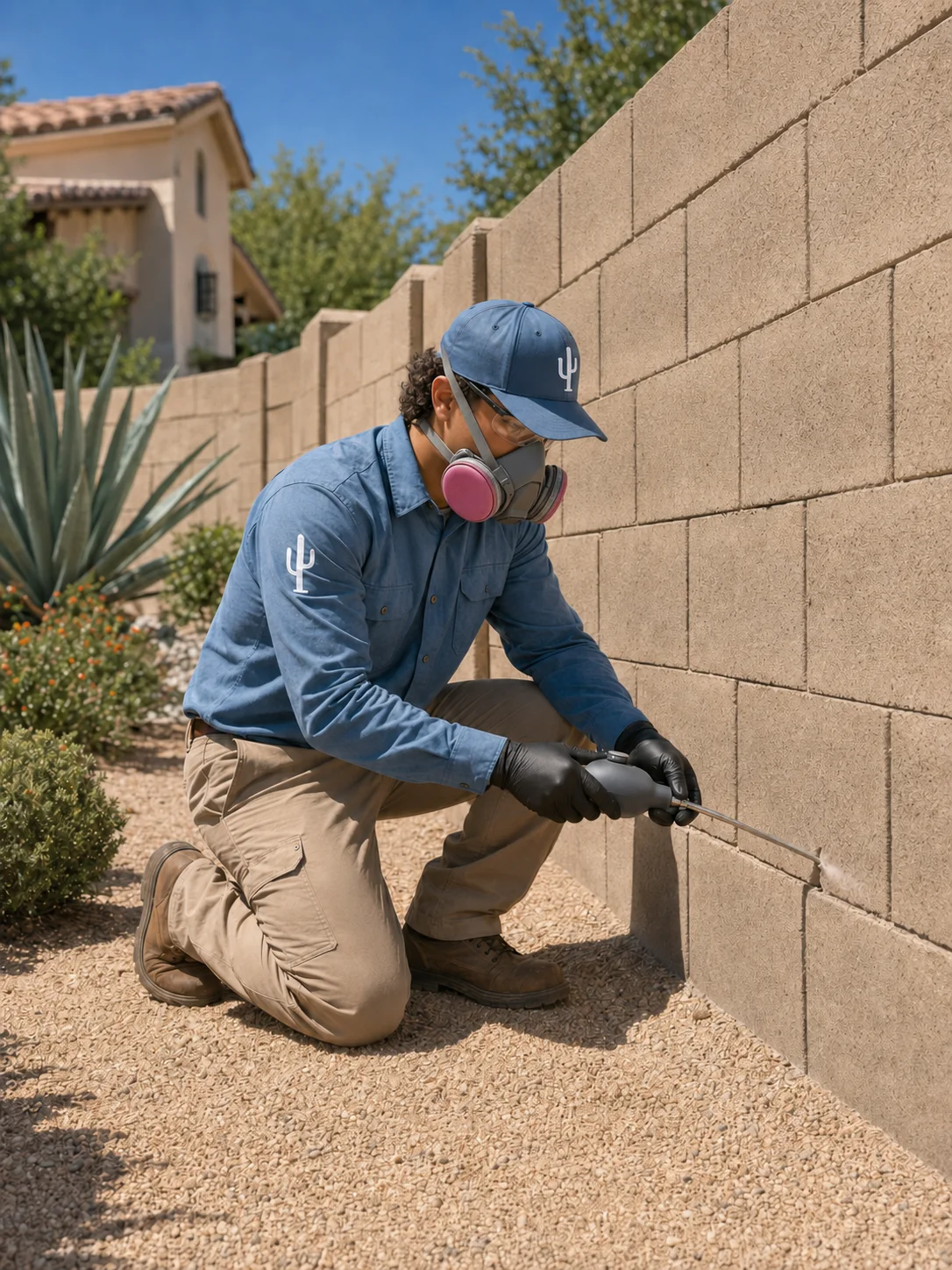
On wash-adjacent lots, the rear wall is the front line. We treat voids, weep holes, and footing lines facing the drainage — the direction pressure arrives from.
Mature block-wall programs
Older Mesa walls hold decades of cracks and voids — prime harborage. Direct void and weep-hole treatment reaches scorpions a surface spray never touches.
Cricket knock-down
Crickets are the scorpion food supply, and established Mesa walls breed them. Cutting the prey base at every visit makes your lot a worse hunting ground.
Monsoon-timed extra attention
Summer storms flush insects and scorpions out of the Usery washes toward houses, so we push harder on the rear wall and harborage through the monsoon months when displaced activity peaks.
Garage threshold and door sealing
A bark scorpion slips through a gap around a sixteenth of an inch, and Mesa garages are the usual way in. We check and seal weatherstripping, thresholds, and utility penetrations on the garage side.
Night-hunting harborage focus
Bark scorpions hunt after dark and hole up by day in cool wall voids and rock. We treat those daytime hiding spots rather than the open ground they only cross at night.
Where Mesa scorpion pressure concentrates
Central and west Mesa run a steadier, lower-grade version driven by mature walls and irrigation. Less dramatic, more persistent — these populations are established residents, and one-time sprays barely register against them.
How the Mesa program runs
Scorpion protection at $99–$119/month then holds the line monthly, with free re-services if anything shows between visits. We run Mesa routes from our San Tan Valley home base — contact us to get your street on the schedule.
The Usery foothills and how scorpions actually move
Movement follows the terrain in Las Sendas, Red Mountain Ranch, and the streets under the Usery Mountains, where washes act like on-ramps from open desert into the neighborhood. Bark scorpions are strong climbers and think nothing of scaling a block wall or working up a second story, which is why the rear wall facing the wash gets our hardest pass. We treat the corridor they arrive through, not just the yard they end up in. That is the difference between denting the count and actually holding a foothill lot.
Why Mesa heat makes cadence the whole game
There is also a food angle that heat and irrigation drive together. Mature Mesa yards, especially the older citrus blocks, hold steady cricket and roach populations that keep scorpions fed and local. Knocking that prey base down at every visit slowly makes your lot a worse place to hunt, which compounds over the season. Pair that with direct wall and weep-hole work and the trend line at the house bends the right way.
New builds versus mature Mesa neighborhoods
In central and west Mesa the story is established populations in mature block walls, fed by decades of harborage and steady irrigation. Here the work is more about reaching into old voids and weep holes and knocking down the resident crickets than about a construction wave. Both profiles respond to the same monthly discipline, just aimed differently once the activity walk tells us which one your street is. That is why we do not run a copy-paste plan across the city.
Questions, answered
My Las Sendas home backs a wash. Is that why I see scorpions?
Almost certainly. Washes are the corridors connecting foothill populations to neighborhoods. Treating your rear wall line and harborage breaks the last leg of that route.
Do older Mesa homes have more scorpions than new ones?
They have different scorpions. Older walls hold established populations; new builds near graded land get displaced ones. Both respond to monthly wall-focused treatment.
What does scorpion control cost in Mesa?
Scorpion protection runs $99–$119/month with monthly visits, after a $129–$179 Initial Defense Service. Re-services between visits are free, and pricing is the same on every street we service.
Do bark scorpions really glow in the dark?
They fluoresce a bright blue-green under UV light, which is the single best way to find them at your house. Grab a cheap blacklight, walk your wall line and patio after dark, and you will see exactly where the activity is. Bring us what you find and we aim the next treatment right at it.
I have old citrus trees. Do they make my scorpion problem worse?
Indirectly, yes. Mature citrus and the moist, shaded ground under it support the crickets and roaches bark scorpions eat, so a well-established yard keeps them fed and nearby. We do not touch your trees, but we do knock down the prey base and harborage around them every visit.
Can you treat inside if I keep finding them in the house?
Yes, interior treatment is part of the Initial Defense Service and available on request at monthly visits. That said, the durable fix is outside on the walls and entry points, so we lead with sealing and exterior work and use interior treatment to back it up.
When is scorpion season worst in Mesa?
Activity climbs with the warm months and spikes around monsoon season, roughly late spring through early fall, when storms push insects and scorpions out of the Usery washes. That is exactly the stretch the monthly plan is built to cover, and re-services in between are free.
Related
Mesa, covered.
Get your price in 30 seconds or call now. If pests show up between visits, so do we — free.
Starting at $49/mo · no contracts · free re-service