No contracts
Month-to-month, so we have to earn every visit.
01
Free homeowner termite inspections from NEARPEST. Report evidence and access concerns. Formal escrow reports are a separate paid service.

Month-to-month, so we have to earn every visit.
Starting prices published before you commit.
Coverage and follow-up are stated in your written proposal.
Based in San Tan Valley and answered by the owners.
Save for your inspection
Keep this checklist on your phone or print a copy to discuss with your NEARPEST technician.
Stay in safely accessible areas; leave attic access and close inspection of damaged wood to the technician. This checklist is a conversation guide, not a completed inspection report.
Download checklist (PNG)To print: open the downloaded image, choose Print, and fit it to one portrait page.
Read the termite inspection guide
After the inspection, we provide findings, photos when needed, and treatment recommendations if activity or risk is found.
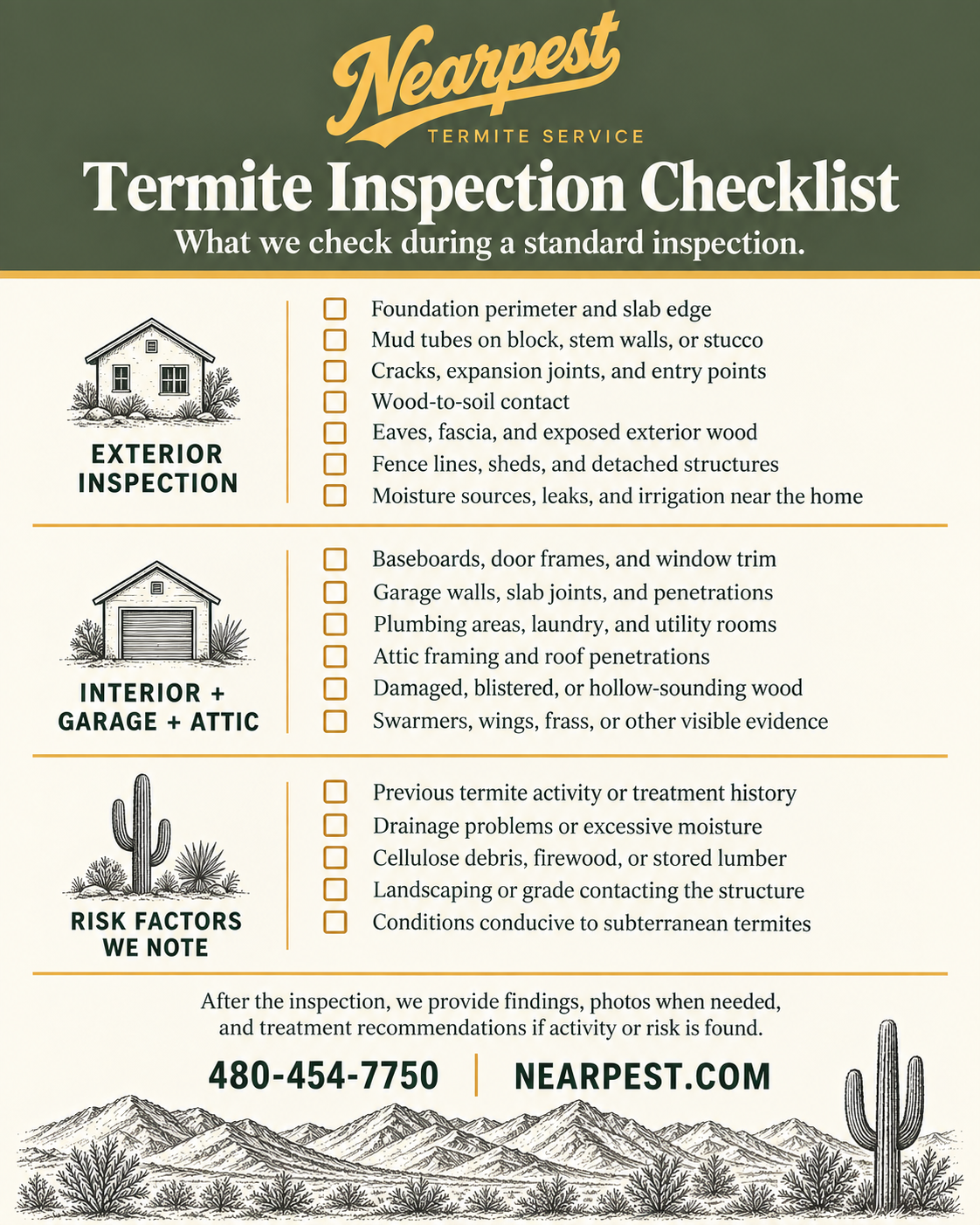
Homeowner termite inspections are free. Tell us where you have seen tubes, damage or other evidence. We review accessible areas and the moisture or wood-to-soil conditions relevant to the request. Access restrictions can limit what can be inspected.
Helpful reading: Homeowner inspection checklist · Queen Creek termite inspections.
The findings guide any treatment recommendation. Treatment is separately quoted before work begins. The price and any warranty terms depend on the work recommended for your property.
A formal wood-destroying-insect inspection report for escrow is a separate paid service. Contact NEARPEST about the report requirements, available appointment and price.
San Tan Valley homeowners who need work after an inspection can review the local termite-treatment process before approving the service details.
Describe the evidence and where it is. Let us know about locked areas, stored belongings or other access restrictions. Share existing photos if available.
Yes. Homeowner termite inspections are free. A formal escrow report is a separate paid service.
No. Termite treatment and bait protection are separate. The inspection establishes a written treatment price.
Any warranty is stated in writing, including its duration, covered re-treatment, exclusions and renewal charges. Review those terms before service.

Request a written specialty quote. We confirm the scope, price, any inspection fee, and follow-up terms before service.