No contracts
Month-to-month, so we have to earn every visit.
01
Fire ants, carpenter ants, odorous house ants, we target the colony with baiting that targets the source. East Valley, AZ. Call 480-454-7750.
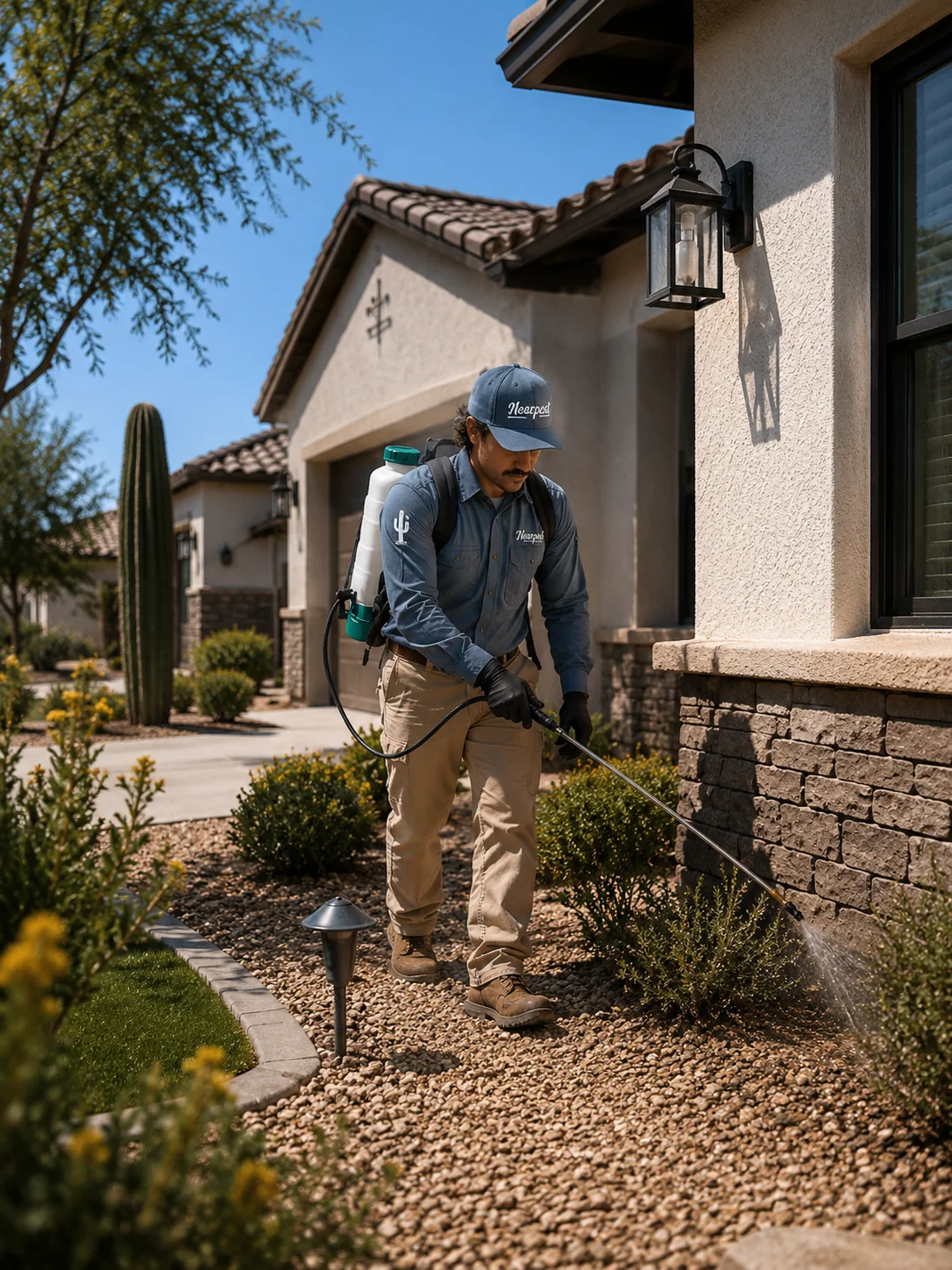
Month-to-month, so we have to earn every visit.
Starting prices published before you commit.
If covered pests return, so do we.
Based in San Tan Valley and answered by the owners.
Serving Gilbert, Chandler, Mesa, Queen Creek, San Tan Valley, Scottsdale, and Tempe. $129–$179 Initial Defense Service, then ongoing protection with published package ranges with free re-services.
From $49/mo, no contract, free re-service
Odorous house ants, southern fire ants, harvester ants, carpenter ants, pavement ants, the East Valley has all of them, and they don't respond to the same treatments.
Slow-acting baits ride worker trails straight back to the queens. That's how you kill a colony instead of splitting it into three.
For fire ants and harvester ants, we treat mounds and nest sites directly, the species that sting get dealt with at the source.
Harvester ants build those big bare-dirt craters in desert landscaping and deliver one of the most painful stings of any ant in the country. Carpenter ants tunnel into damp or damaged wood, they don't eat it like termites, but they'll excavate it. Pavement ants work the cracks in your driveway and slab.
Five species, five different playbooks. That's why a one-spray-fits-all approach keeps failing, and why we start every ant job with identification.
Ant pressure in the desert never really stops, colonies forage harder every time temperatures swing or irrigation changes. Ongoing plans with published package ranges keep a treated perimeter between their world and your kitchen, and re-services between visits are always free.
Contact us. Tell us what the ants look like and where you're seeing them, and we'll take it from there.
Plans & pricing
Quarterly Pest Plan
Every 3 calendar months
From $ 49 /mo
Billed monthly
Straightforward seasonal protection for maintained homes with lower pest activity.
Basic Pest Plan
Every 2 calendar months
From $ 59 /mo
Our recommended plan for consistent Arizona home protection.
Monthly Pest Plan
Every calendar month
From $ 99 /mo
High-frequency protection for active pest activity or customers who want monthly inspections and treatment.
Your first service payment includes the one-time Initial Defense fee ($129 small, $149 standard, or $179 large) plus your first monthly payment. Monthly billing continues afterward, separately from your visit schedule. Homes over 3,500 sq. ft., acreage, and specialty infestations require a written quote.
Related
Store-bought repellent sprays kill the workers you can see and panic the colony you can't. Species like odorous house ants respond by budding, splitting into multiple colonies. Baiting that reaches the queens is what addresses the cause.
Southern fire ants sting, and they sting in numbers when a mound is disturbed. For kids, pets, and anyone with sting allergies, a mound in the yard is worth treating promptly, we treat mounds directly at the source.
They mean you have moist or vulnerable wood somewhere, carpenter ants excavate damp wood to nest in rather than eating it. We treat the ants and point out the moisture problem so the nest site doesn't reload.
Workers usually swarm the bait within hours, and colonies typically collapse over days to a couple of weeks depending on size and species. Seeing more ants right after treatment is normal, that's the bait doing its job.

See your price online or call and talk to Ryland or Keegan.