No contracts
Month-to-month, so we have to earn every visit.
COMMERCIAL, OFFICES & WAREHOUSES
Office and warehouse pest control in metro Phoenix. Warehouse rodent plans from $400/mo with bait station grids, dock-door monitoring, and audit-ready logs.
Month-to-month, so we have to earn every visit.
Starting prices published before you commit.
If covered pests return, so do we.
Based in San Tan Valley and answered by the owners.
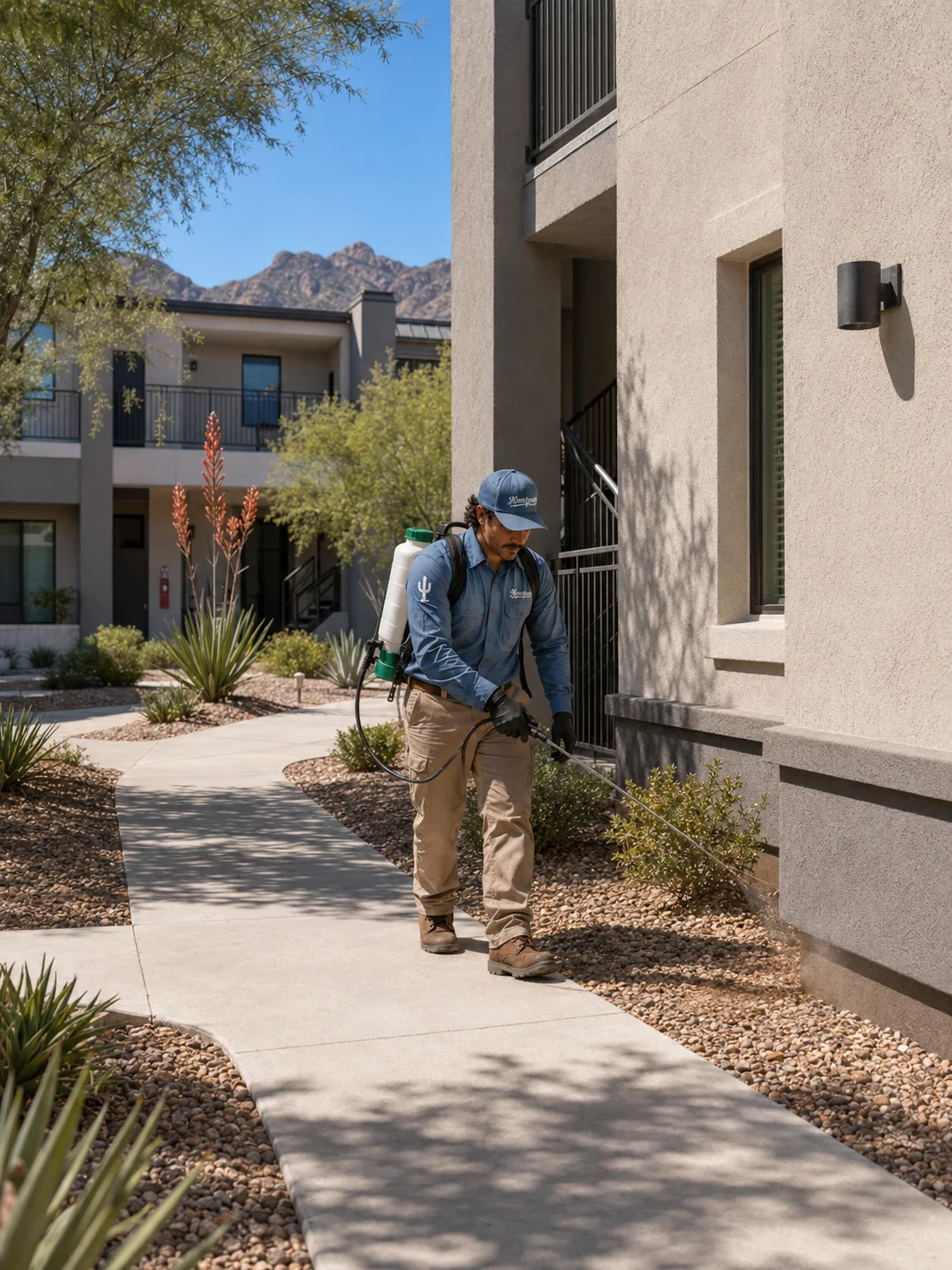
Exterior bait station grids, dock-door rodent programs, and documentation built for third-party audits.
Numbered stations on a mapped grid around the building perimeter, checked and logged on every visit, so you can see exactly where pressure is rising.
Dock doors are the front door for rodents. We concentrate monitoring and inspection where pallets, gaps, and night deliveries invite them in.
Targeted interior work for kitchens, break rooms, and common areas, handled discreetly and scheduled around your staff.
Service logs and trend reports after every visit, suitable for third-party audit requirements. We document what we did and what we found, every time.
Door sweeps, sealed gaps at grade, and closed penetrations at the points rodents use. Exclusion keeps them out; baiting alone only counts the ones already inside.
Station data is tracked over time so a rising count triggers a look before it becomes an infestation. You see where pressure is climbing, not just a pass or fail.
Discreet monitoring and glue devices in storage and staging areas catch rodent and insect activity in inventory before it reaches a customer shipment.
We build a numbered exterior bait station grid with service mapping, so every station is checked, logged, and trended visit over visit. When activity climbs at stations six through nine, you know which corner of the building to look at, and so do we.
Every account gets the same documentation discipline whether anyone audits it or not.
That is why a warehouse program cannot be all bait. NEARPEST pairs the exterior station grid with exclusion: door sweeps, sealed penetrations, and closed gaps at grade, so the building stops inviting them in. Baiting and monitoring handle the pressure that is already there, and exclusion is what keeps the next wave outside. Run one without the other and you are either counting rodents or chasing them.
clear answers on service details: NEARPEST is not an auditing or certifying body, and we will not claim certifications we do not hold. What we do is supply exactly what auditors ask a pest vendor for, complete service logs, station maps, and trend reports after every visit, in a form you can put in front of an inspector. Every account gets that same documentation discipline whether anyone audits it or not.
Then it gets documented. You get a dated service record and, over time, trend reporting that shows whether pressure is holding, climbing, or coming down, and where. Exterior grid work happens without entering production space, and interior work is scheduled around shifts and deliveries so the program runs without stopping the operation.
The walkthrough is free and is where service details and pricing are set. Footprint, dock count, station grid size, and existing pressure all move the number, so we price from the building. Small business protection starts from $175 per month, and warehouse rodent plans start from $400 per month, with final pricing set after the walkthrough.
More commercial programs
Free walkthrough, written program, starting-at pricing you saw before we ever showed up.
Small business protection starts from $175/month. Warehouse rodent plans from $400/month depending on footprint, dock count, bait station grid, and pressure.
We provide service logs, station maps, and trend reports suitable for third-party audit requirements. We are not an auditing or certifying body, we supply the documentation your auditor expects from your pest vendor.
No. We schedule around shifts, deliveries, and tenant hours, and most exterior grid work happens without entering the building at all.
Call us. Re-service between scheduled visits is free, we come back, address it, and document the corrective visit in your service log.
It depends on the footprint, the number of dock doors, and the pressure we find at the baseline walkthrough, not a fixed formula. We place a numbered grid where the building is exposed, map it, and log every station each visit so the count is justified and auditable.
It is one program. Offices and break rooms get targeted interior work for ants and roaches scheduled around staff, while the warehouse and dock get the rodent grid and exclusion. One vendor, one schedule, one report.
A dated service log of what was inspected, treated, and found, plus your station map and trend reporting over time. It is built to be what an auditor expects from your pest vendor, and every account gets it whether or not it is audited.
Dock doors are the main entry point, so we combine monitoring there with exclusion: door sweeps, sealed gaps at grade, and closed penetrations. Baiting handles what is already inside, and exclusion is what stops the next one from walking in on a pallet or through a propped door.

See your price online or call and talk to Ryland or Keegan.