No contracts
Month-to-month, so we have to earn every visit.
Field guide
Look at the pincers and tail together. Bark scorpions have slender pincers and tails; stripe-tailed scorpions are stockier, and adult giant hairy scorpions are much larger. Color or location alone cannot confirm a species.
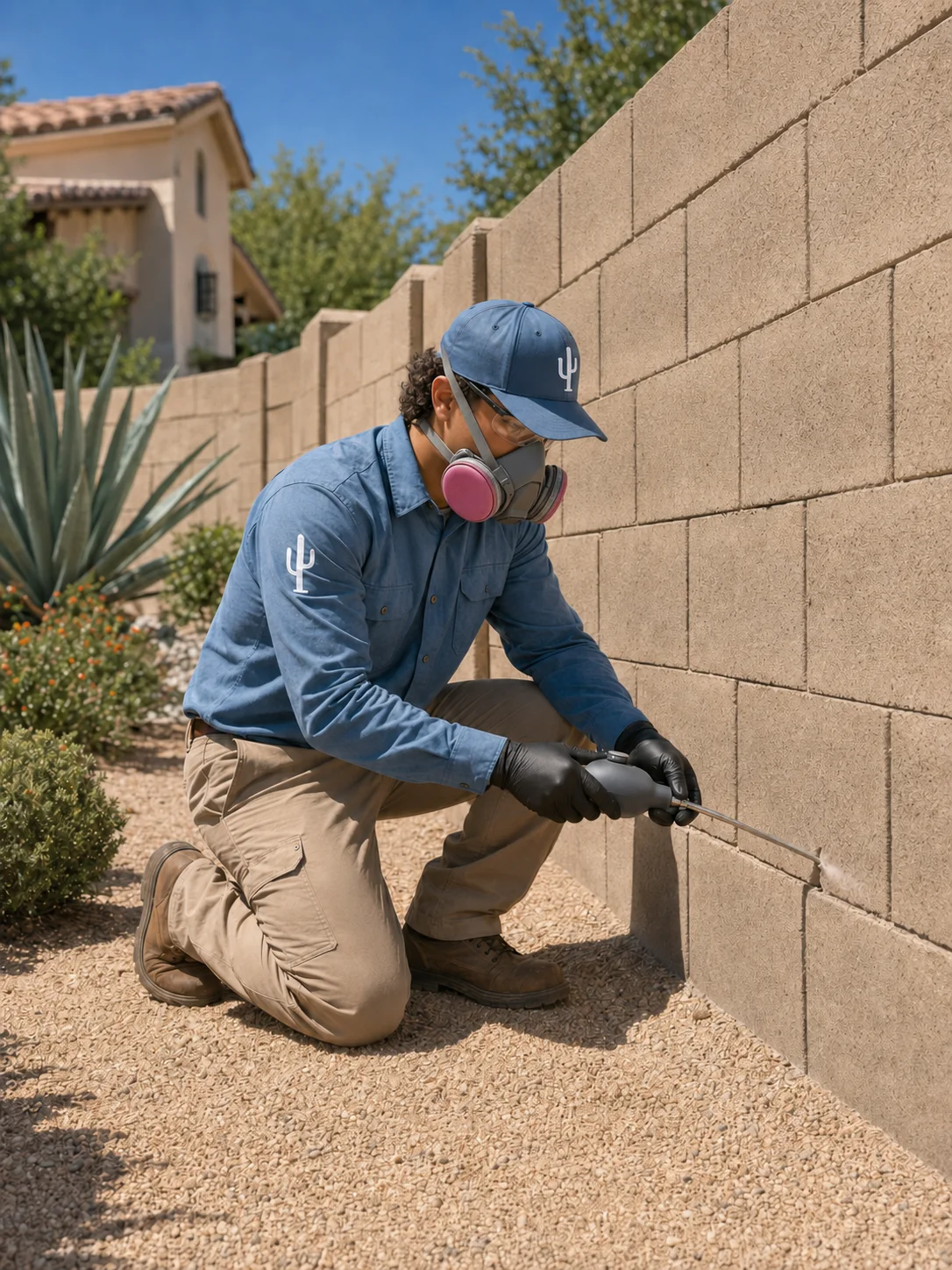
Month-to-month, so we have to earn every visit.
Starting prices published before you commit.
If covered pests return, so do we.
Based in San Tan Valley and answered by the owners.
| Scorpion | Adult size | What to look for |
|---|---|---|
| Arizona bark scorpionCentruroides sculpturatus | About 2–3 inches | Slim pincers and a long, narrow tail. Color and markings vary; climbs well. |
| Arizona stripe-tailed scorpionParavaejovis spinigerus | Under 3 inches | Stockier pincers and tail than a bark scorpion; a burrowing species. |
| Arizona giant hairy scorpionHadrurus arizonensis | Often over 5 inches | Large, heavy body, often with a darker back and pale sides; shelters under rocks or in burrows. |
These clues are not a complete identification key. Other species occur in Arizona. Do not handle a scorpion to inspect it; use a photo taken from a safe distance.
Source: University of Arizona Cooperative Extension: Scorpions of the Desert Southwest. UV-light guidance: UC IPM.
Keep people and pets away and avoid handling the scorpion. Record where and when you saw it, and take a photo from a safe distance if possible. Repeated indoor sightings are a reason to inspect entry points and nearby hiding places.
Standard scorpion control is included in General Pest Protection. Scorpion Sealing / Exclusion is a separate service from $399. Recurring visits include treatment and attention to common entry points; structural sealing and exclusion cost extra.
Bark scorpions climb well, but the location alone is not enough for an identification. Compare the pincers, tail, and body shape.
One sighting does not show how many scorpions are present. Record the location and date, and request an inspection if indoor sightings repeat.
UV light can help you find scorpions, but the glow does not identify the species. Use several visible features and a safely taken photo.

See your price online or call and talk to Ryland or Keegan.