No contracts
Month-to-month, so we have to earn every visit.
Field guide
Those pencil-thick dirt lines climbing your stem wall are the most clear evidence termites ever give you. Here is how to read them.
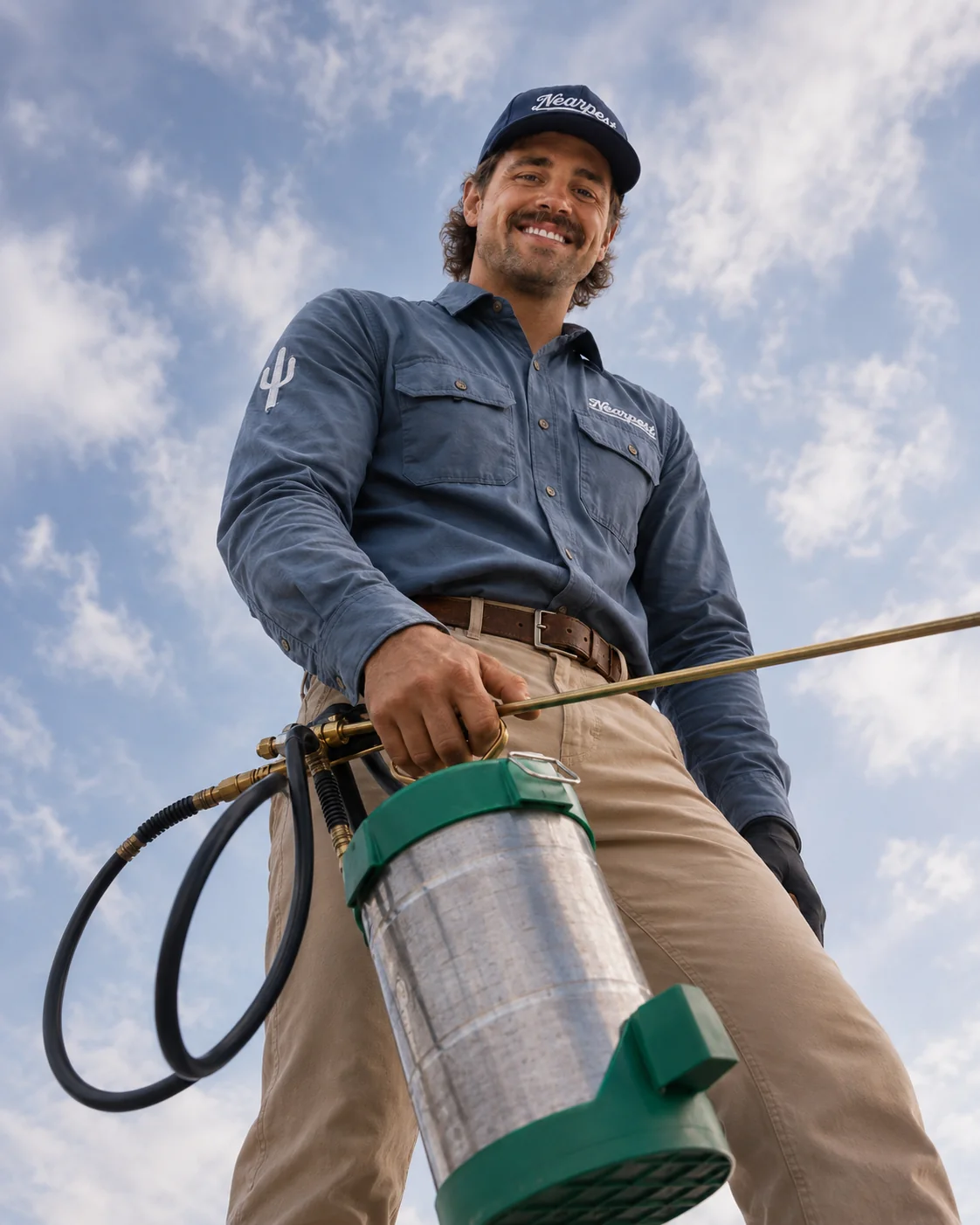
Month-to-month, so we have to earn every visit.
Starting prices published before you commit.
If covered pests return, so do we.
Based in San Tan Valley and answered by the owners.
Look for tubes in the classic spots: the exterior stem wall (especially behind shrubs and where soil or gravel sits high), inside the garage along the base of drywall, in the corners of closets on exterior walls, and hanging from ceilings or eaves in heavy infestations, this species also builds distinctive drop tubes that dangle like dirty stalactites.
Width matters for identification: desert subterranean tubes are narrow, often the width of a pencil lead to a pencil. Mud dauber wasps and swallows also leave mud on walls, but only termite tubes run in continuous lines from the soil upward.
Abandoned is not the same as safe. Colonies routinely retreat during dry, hot stretches and return when soil moisture improves, and an abandoned tube proves a colony has already found your house once. It is a reason for an inspection, just not an emergency.
Do not spray the tubes with over-the-counter insecticide. You will kill the few dozen workers present and push the colony to reroute, while the thousands of termites in the soil colony are untouched. Surface spray on a tube is the most common DIY mistake we see, and it makes infestations harder to trace.
The job is trenching around the stem wall, drilling patio and garage slabs where they abut the foundation, and treating the soil beneath, the thoroughness of that perimeter is most of what separates a good termite job from a cheap one. Expect a warranty measured in years, and expect the applicator to be licensed by the Arizona Department of Agriculture's Pest Management Division; termite work in Arizona legally requires it. Our reviews and service details are on the NEARPEST Google Business Profile if you want to check us out before we ever set foot on your property.
Monsoon season is when swarms and new tube-building peak, which makes late summer and fall the most common discovery window. There is no wrong season to treat, soil treatment works year-round.
Slower than horror stories suggest. Desert subterranean termite colonies are smaller and slower-eating than the Formosan termites of the Gulf states. Damage accumulates over months and years, not weeks, which is exactly why catching tubes at the stem wall usually means you are early, and why ignoring them for a few years is what gets expensive.
It is worth a look at your own stem walls, but not because their colony is fleeing to you, soil treatments eliminate colonies rather than relocating them. The real signal is that your neighborhood's soil clearly supports termite pressure. In most established East Valley neighborhoods, it does.
Both can work. Baiting eliminates colonies but works over months and depends on termites finding the stations; a liquid perimeter protects immediately and, with non-repellent products, also spreads through the colony. For typical slab-on-grade East Valley homes we usually recommend liquid first and clear quotes will explain the tradeoff rather than pushing whichever earns recurring fees.
Almost never, insurers treat termite damage as preventable maintenance, not a covered peril. That is the financial argument for inspections: the inspection is free, soil treatment is a defined cost, and structural repair is neither. If you are buying or selling a home, Arizona lenders commonly require a termite inspection report for good reason.
If this guide hit close to home, start with an Initial Defense Service or recurring plan, or call and we'll talk you through it.
Starting at $45 /mo · no contracts · free re-service
Check visible foundation walls, garage edges, and places where soil or stored materials obscure the structure. Record what you find for the inspector.
An old tube does not establish the current condition of the property. Arrange an inspection rather than assuming that no visible movement means no activity.
Photograph the tubes and leave the evidence in place for the inspector where practical. Tell the inspector if any part has already been disturbed.

See your price online or call and talk to Ryland or Keegan.